Project 05 · Build note
Automated Drink Pourer
Fill a line of cups automatically: a 2.5-DOF Cartesian gantry plus a peristaltic pump, pivoted halfway when icing proved unpumpable.
ME 360 — Engineering Product Design, Fall 2023: four of us, around one to one and a half months, and no class budget — everything we bought came out of our own pockets. The assignment: a 2.5-degree-of-freedom Cartesian system — X and Y motion plus a third degree of freedom that is only on or off, not a Z axis like a 3D printer. I owned the peristaltic pump; a teammate and I owned the X and Y axes; another teammate wrote the G-code with me assisting — and beyond that, everyone sort of had their hands on everything.
The icing failure that made it a drink pourer
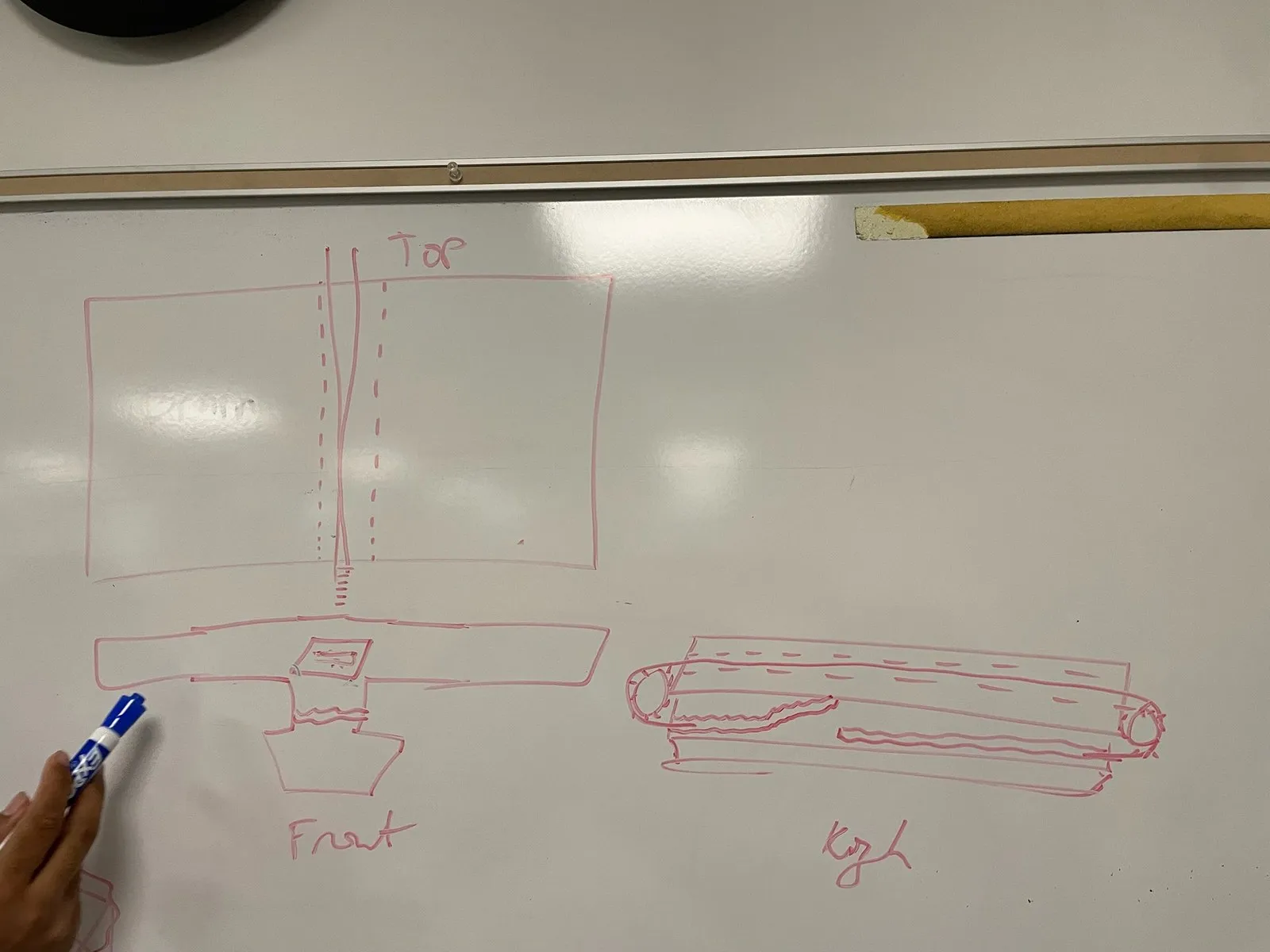
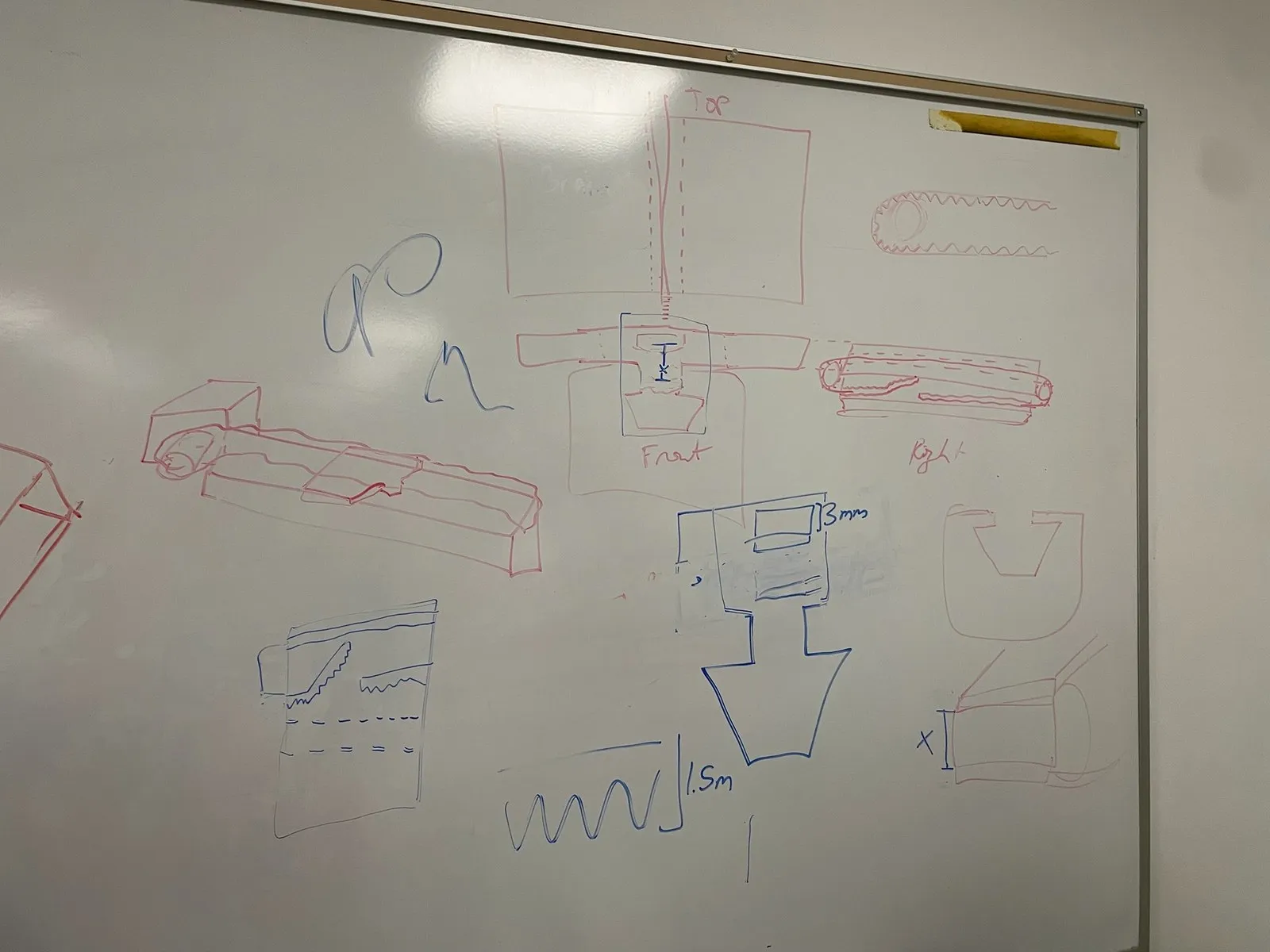
The original use case was an automatic cookie decorator, with icing pumped up from a reservoir below rather than squeezed from a container riding on the gantry.
On a dry or cold day, the icing was essentially a solid.
The icing’s viscosity was that inconsistent — it pumped only a little, nowhere near controllable dispensing. I hadn’t thought about possible modes of failure at the start, and it led to this one. Halfway through we made the call: cut the cookie use case and point the pump — pretty much fully developed by then — at a drink it could actually handle. Pivoting off that failure is what made the project succeed, and I’m still proud of that call.
Tuning pump compression by reprinting the housing
We went peristaltic because it can pump liquid out of any chamber — a bottle, another cup, anything. The pump is bearings rolling over silicone tubing in a 3D-printed housing; the bearing-to-tubing gap sets the compression, and getting it right was the one major point of failure — over-compress and you block flow, under-compress and you don’t make enough pressure. Printing the housing made each change cheap — adjust the spacing in CAD and reprint — and it took five printed housings to land in the window that produced reliable flow.
The demo: two cups on one G-code run
The test was the demo: line up the cups and run the G-code — raw G-code, written by hand for the cup layout and run on an Arduino — moving the axes and switching the pump.
The G-code ran and both cups were properly filled — a pass/fail result; flow rate, fill accuracy, repeatability, and our out-of-pocket spend all went unrecorded.
| Requirement | Target | Achieved | Verified by |
|---|---|---|---|
| 2.5-DOF Cartesian system — X, Y, plus on/off only | 2.5 DOF, no Z travel | as specified | final demo |
| Fill multiple lined-up cups at the locations written into the G-code | no numeric target stated | 2 cups properly filled | running the G-code, pass/fail |
What I’d change is the team structure: hands-on-everything was good for gaining technical knowledge at that stage, but today I’d give each person a distinct subsystem to own and become expert in, then integrate.
The build
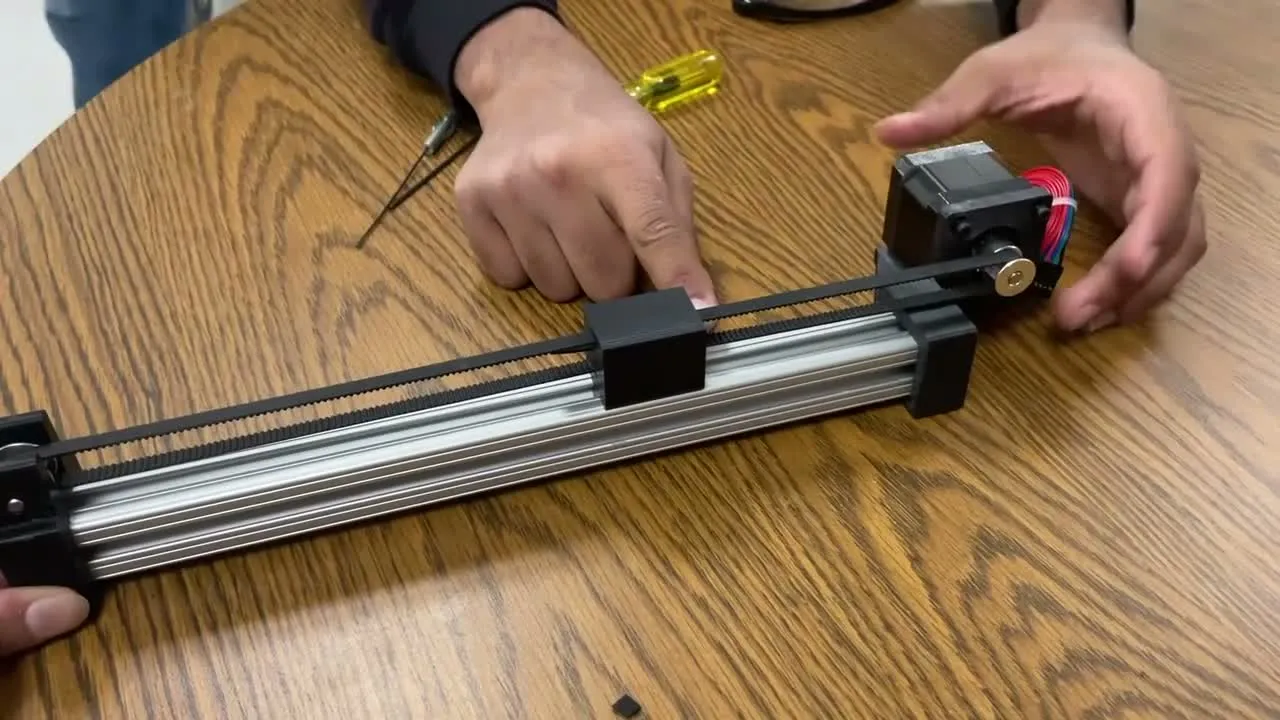
.D0xwuyLb_1wKpPj.webp "A completed axis of motion, the X and Y I helped with. There was no budget — everything we bought came out of our own pockets.")